Mitochondria are membrane-bound organelles found in almost all eukaryotic cells (animals, plants, fungi). They are best known as the cell’s powerhouses, but their roles go well beyond energy production.
⸻
Core function: energy (ATP) production
Mitochondria generate ATP (adenosine triphosphate), the cell’s usable energy currency, via oxidative phosphorylation. 1. Fuel breakdown Nutrients (glucose, fatty acids, some amino acids) are converted into reduced cofactors (NADH, FADH₂). 2. Electron transport chain (ETC) Electrons flow through protein complexes embedded in the inner mitochondrial membrane, releasing energy. 3. Proton gradient That energy pumps protons (H⁺) across the inner membrane, creating an electrochemical gradient. 4. ATP synthase Protons flow back through ATP synthase, driving ATP formation—an elegant molecular turbine.
⸻
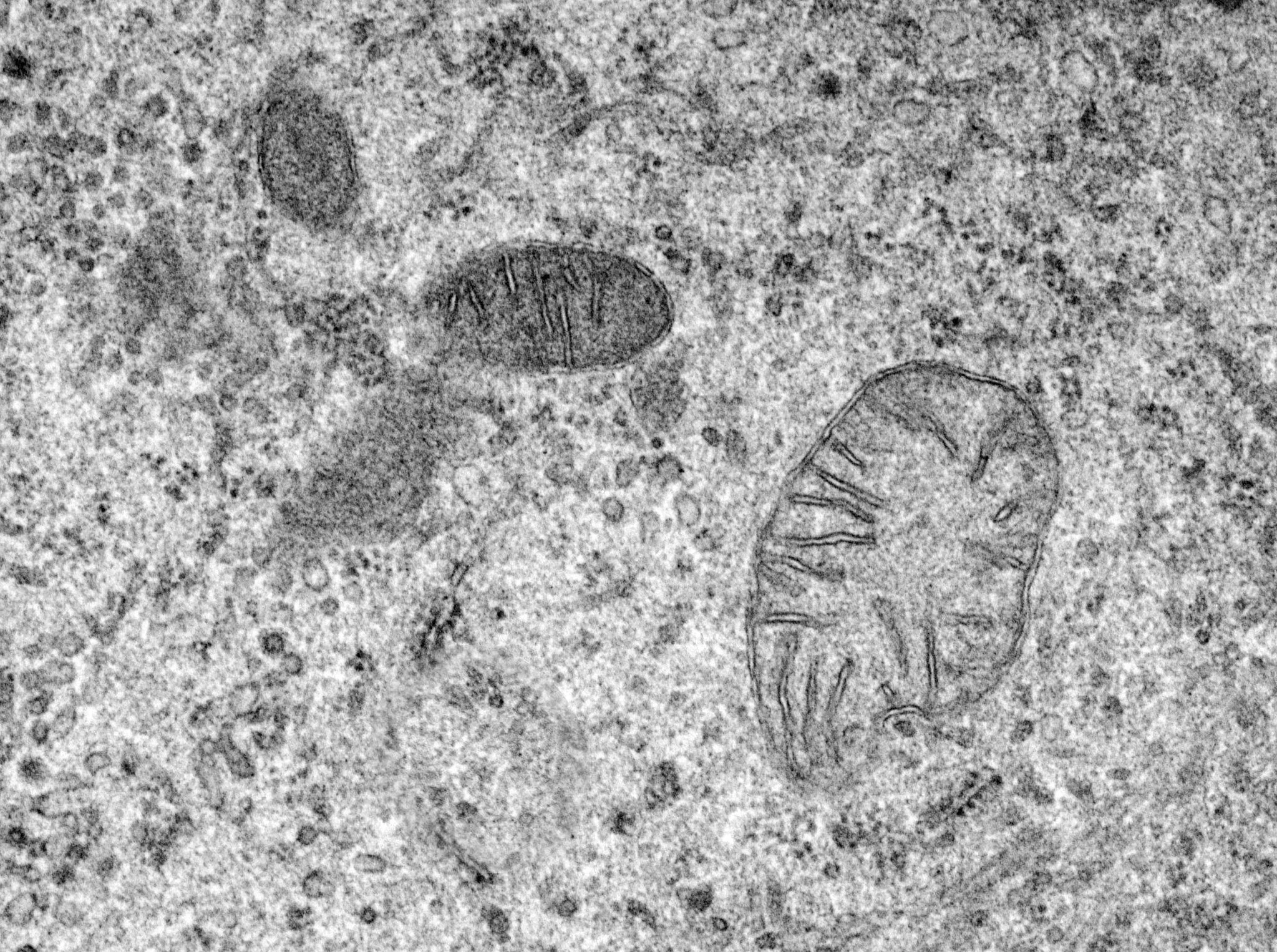
Structure (why shape matters) • Outer membrane: relatively permeable to small molecules. • Inner membrane: highly impermeable; folded into cristae to massively increase surface area for the ETC. • Intermembrane space: holds the proton gradient. • Matrix: contains enzymes for the citric acid (Krebs) cycle, mitochondrial DNA, and ribosomes.
The tight coupling of membrane architecture and chemistry is crucial: more cristae → more ATP capacity.
⸻
Other essential roles • Metabolic hub: fatty-acid β-oxidation, parts of amino-acid metabolism, and heme synthesis. • Apoptosis (programmed cell death): mitochondria release signaling proteins (e.g., cytochrome c) that trigger orderly cell death. • Heat production: in brown adipose tissue, mitochondria can uncouple respiration to produce heat instead of ATP. • Calcium handling & signaling: they buffer and shape cellular Ca²⁺ signals.
⸻
A striking evolutionary fact
Mitochondria have their own DNA and replicate independently of the cell cycle. This supports the endosymbiotic theory: they descend from ancient bacteria that entered into a symbiotic relationship with early eukaryotic cells ~1.5–2 billion years ago.
⸻
Why mitochondria matter clinically
Defects in mitochondrial function disproportionately affect high-energy tissues (brain, muscle, heart), leading to a wide range of mitochondrial diseases. Aging, neurodegeneration, and metabolic disorders also involve mitochondrial dysfunction.
⸻
In one sentence: mitochondria are not just batteries—they are dynamic, semi-autonomous organelles that integrate energy production, metabolism, signaling, and cell fate.